Funny Donkey Pee SVG: A Designer's Real-World Review
As someone who spends more time staring at stitch maps than most people spend looking at their own families, I approach every new digital embroidery file with a healthy dose of skepticism. We've all been there: you buy a cute graphic online, load it into your software, and realize the paths are a mess, the density is too high for anything but denim, or the details are so tiny they'll vanish under a standard needle. So, when I got my hands on the Donkey Svg, Funny Donkey Svg, Donkey Pee package, I didn't just look at the preview image. I wanted to know if this thing could actually hold up in a real embroidery project.
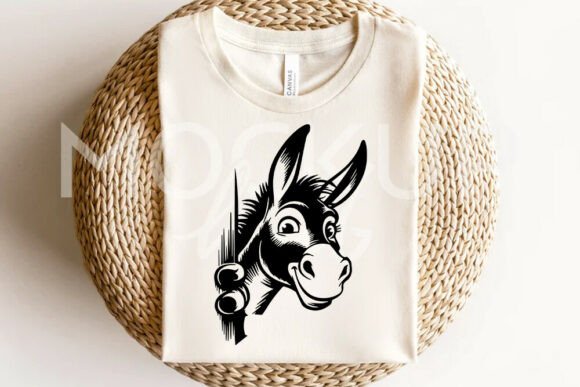
The first impression of this design is pure whimsy. There is a specific kind of humor that works incredibly well in the handmade world, especially for boutique items and personalized gifts. It's not just about the image; it's about the attitude. This particular graphic leans heavily into that "farmyard funny" vibe that seems to be trending everywhere from nursery decor to adult novelty tees. Visually, the layout feels open and breathable, which is a massive plus. Overly complex designs often turn into bird's nests of thread, but the silhouette here suggests clean lines that should translate well from screen to fabric.
Putting the Design to the Test: The Tote Bag Scenario
To give this machine embroidery design a fair shake, I decided to skip the test swatches initially and go straight for a product that sees heavy use: a canvas tote bag. Canvas is forgiving, but it also highlights poor digitizing immediately. If the stitch density is off, the fabric puckers; if the underlay is missing, the edges look frayed before you even wash it.
I loaded the SVG file directly into my editing software. One of the immediate benefits of receiving files in SVG, EPS, DXF, and PNG formats is flexibility. For embroidery, I usually prefer working with the vector formats (SVG, EPS, DXF) because they allow me to manipulate the nodes if I need to adjust the size for a specific hoop size. The paths in this donkey design were surprisingly clean. There weren't any stray anchor points or overlapping lines that usually cause machines to stutter.
For the tote, I chose a bright yellow thread for the main body of the donkey to make it pop against the natural canvas, using a contrasting dark brown for the outline. The result was charming. The "funny" aspect of the design landed perfectly—it wasn't offensive, just lighthearted enough to make a customer smile at a craft fair. This is exactly the kind of small shop product that drives impulse buys. It fits seamlessly into a collection of farm-themed goods or even as a standalone statement piece for someone who loves animals with a sense of humor.
Versatility Across Different Fabrics and Products
While the tote bag was a success, a professional designer knows that one good run doesn't guarantee universal compatibility. I started thinking about where else this Donkey Svg, Funny Donkey Svg, Donkey Pee asset could live.
- Sweatshirt Embroidery: On fleece or French terry, this design would work beautifully as a chest logo. The simplicity of the shape means it won't get lost in the texture of the knit.
- Baby Embroidery: Parents love unique, non-generic designs for onesies. As long as the scale is reduced appropriately, this could be a hit for baby shower gifts. However, you must ensure the stabilizer is soft enough for sensitive skin.
- Embroidered Patch: Creating a merit badge style patch with this design is a no-brainer. The bold outlines are perfect for a satin stitch border, making it durable enough for backpacks or jackets.
- Holiday Embroidery: Believe it or not, animal themes work year-round. Think "Spring Farm" collections or even humorous holiday cards turned into stitched ornaments.
The key to success across these varied applications lies in how you handle the thread colors and fabric texture. On dark fabrics, you might need to increase the density of the fill stitch or add an extra layer of underlay to prevent the background color from peeking through. Conversely, on thin, stretchy fabrics like jersey knits, you have to be careful not to make the design too dense, or it will act like a stiff patch and distort the garment.
Critical Considerations for Commercial Use
If you are an Etsy seller or running a craft business, your reputation hinges on the quality of your finished product. A design that looks great on a monitor but stitches out poorly can lead to returns and bad reviews. With this specific graphic, there are a few areas where you need to exercise caution.
First, consider the hoop size constraints. If you are planning to put this on a cap, remember that curved surfaces change how the design sits. The "pee" element of the design involves a stream line; on a curved surface like a baseball cap, long running stitches can sometimes sink into the fabric or look wavy if not properly stabilized. I would recommend testing this on a scrap piece of the actual cap material before committing to a production run.
Second, think about washing instructions. Any item labeled as custom apparel needs to withstand laundry. Designs with large solid fill areas can sometimes crack or pucker after multiple washes if the stitch direction isn't varied. Since this is a vector-based graphic converted for embroidery, check how your software handles the fill angles. A 45-degree angle is usually safe, but for larger areas, a alternating pattern might provide better durability.
Enhancing Visual Appeal and Brand Consistency
Beyond the technical stitching, there is the matter of brand voice. Using a funny donkey svg sends a specific message: your brand doesn't take itself too seriously. It's approachable, fun, and human. This is invaluable for building customer trust and engagement. People connect with personality. When a buyer sees a well-executed, humorous design on a high-quality towel or apron, they perceive higher value. It transforms a generic commodity into a personalized gift with character.
For those creating printable mockups or digital previews for their online stores, the included PNG file is a handy asset. It allows you to show customers exactly what the design looks like without needing to stitch a sample first. However, always clarify in your listings that the physical item is embroidered, as the texture of thread adds a dimension that a flat digital image cannot fully capture.
Final Verdict and Designer Notes
Overall, the Donkey Svg, Funny Donkey Svg, Donkey Pee collection is a solid addition to a designer's library. It bridges the gap between novelty and usability. It's not just a clip-art afterthought; it has the structural integrity to become a legitimate commercial embroidery asset.
Before you dive in, here are my practical recommendations:
- Test on Scraps: Always stitch a sample on the exact fabric you intend to sell. What works on cotton might fail on polyester blends.
- Check Licensing: While the files are ready to use, always double-check the specific license terms regarding commercial sales. Can you sell the stitched item? Can you sell the digital file? Clarity here protects your business.
- Contrast is Key: Play with thread colors. A monochromatic look might be chic for a boutique, while high-contrast primary colors work better for kids' items.
- Mind the Details: Inspect the small corners of the design. If your machine struggles with sharp turns, you may need to manually edit the stitch points in your software.
In the world of Crafts and Graphics, finding a design that balances humor with technical reliability is rare. This donkey design manages to do both. Whether you are making a single gift for a friend or stocking inventory for the next holiday rush, this file offers the versatility and charm needed to create products that people actually want to own and wear. Just remember: the secret to great embroidery isn't just the file you buy, it's the care you take in executing it.