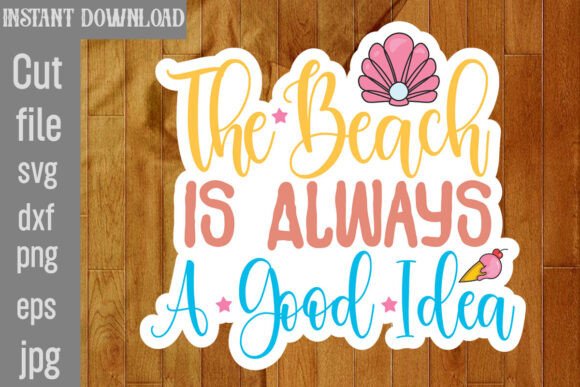
Review: The Beach is Always a Good Idea SVG for Embroidery
As an embroidery designer who spends more time staring at stitch simulations than I do sleeping, I have learned to be skeptical of digital assets. We all know the struggle: a digital embroidery file looks crisp on the screen but turns into a tangled mess of thread breaks and puckering once it hits the hoop. When I first pulled up The Beach is Always a Good Idea SVG, my initial reaction was cautious optimism. The phrase itself carries a weight of nostalgia and relaxation, but does the design hold up under the needle? After testing it across various fabrics and hoop sizes, I am ready to share my practical assessment for fellow Etsy sellers, craft business owners, and hobbyists looking to elevate their summer collections.
First Impressions: Mood and Visual Personality
The immediate appeal of this design lies in its typographic balance. It is not just text; it is a statement piece. The layout suggests a casual, breezy aesthetic that aligns perfectly with current trends in custom apparel. For those of us working in Crafts and Graphics, we know that typography-based designs are tricky. If the kerning is off or the font weight is too thin, the embroidery machine will struggle to render the letters cleanly. Fortunately, this SVG appears to have been optimized with sufficient boldness, suggesting it will translate well into satin stitches or dense fill stitches without losing legibility.
The mood is undeniably summery. It evokes images of boardwalks, ice cream cones, and salty air. This emotional connection is vital for handmade product success. Customers are not just buying a shirt; they are buying a feeling. When I visualize this on a tote bag design, I see a product that speaks to the buyer’s desire for escape and leisure. That is powerful marketing wrapped in a simple graphic.
Real-World Application: From Screen to Stitch
To truly evaluate a design, you must imagine it in situ. I mentally placed The Beach is Always a Good Idea SVG on several common items to gauge its versatility. Here is how it performs in specific scenarios:
- Sweatshirt Embroidery: On a heather grey or sand-colored crewneck, this design would shine. The texture of the fleece provides a stable base for the stitching, allowing the thread colors to pop. I recommend using a cutaway stabilizer to prevent the heavy fabric from distorting the lettering over time.
- Tote Bags and Canvas: This is perhaps the strongest use case. Canvas has a tight weave that supports detailed embroidery. Placing this phrase on a natural cotton tote creates a chic, boutique-style accessory. It transforms a generic bag into a small shop product with personality.
- Baby Embroidery: While the sentiment is universal, the scale matters. For baby items, you would need to resize the design significantly. Ensure that the smallest details remain large enough to stitch cleanly on soft, stretchy knits. A lightweight tear-away stabilizer is essential here to maintain comfort against sensitive skin.
- Embroidered Patch Creation: If you are making iron-on patches, this design works beautifully. The clear lines allow for a clean merrowed edge or a simple satin border. It becomes a versatile design asset that customers can apply to jackets, hats, or backpacks later.
Technical Considerations and Potential Pitfalls
While the design is strong, no machine embroidery design is universally perfect without adjustment. There are specific contexts where you should proceed with caution. First, consider the hoop size. If you are working with a 4x4 inch hoop, you may need to break the design into two parts or reduce the size drastically, which could compromise the readability of the smaller words. Always check the dimensions before loading your file.
Fabric texture plays a massive role. On highly textured fabrics like terry cloth towels or rough linen, fine details can get lost. If you plan to use this on a kitchen towel or a rustic pillow cover, consider increasing the stitch density slightly or choosing a thicker thread weight to ensure the letters stand out against the background texture. Conversely, on thin, stretchy fabrics like performance tees, the design might pucker if the pull compensation is not adjusted correctly. Always test on scrap fabric first.
Another critical factor is color contrast. The description mentions "vibrant, color-filled" elements, which suggests this might be intended for print or applique. However, for pure embroidery, you must carefully select your thread colors. A dark thread on a dark navy shirt will vanish. I strongly advise creating black and white mockups to check the silhouette of the design. If the shape holds up in monochrome, it will work in color. If it relies solely on color contrast to be readable, it may fail in low-light conditions or on busy patterns.
Enhancing Product Value and Brand Consistency
For commercial embroidery professionals, consistency is key. Using a high-quality SVG ensures that every unit you produce looks identical, building trust with your customers. When a buyer receives a personalized gift that looks professional and well-stitched, they are more likely to leave a positive review and return for future purchases. This design contributes to that perception of quality.
Moreover, this SVG serves as an excellent tool for creating printable mockup assets. Before you even stitch a single thread, you can place this graphic on digital photos of shirts and bags to test market response. This saves time and materials, allowing you to refine your Etsy listings with confidence. It bridges the gap between digital design and physical production, making it a valuable addition to your library of design assets.
Practical Designer Notes for Best Results
To get the most out of The Beach is Always a Good Idea SVG, follow these practical steps before starting your next embroidery project:
- Verify File Formats: The product description lists SVG, DXF, EPS, PNG, and JPEG. Note that these are primarily vector and image formats, not native machine embroidery files (like PES or DST). You will likely need to digitize this SVG into an embroidery file using your preferred software. This gives you control over stitch types, allowing you to choose between satin stitch for smooth edges or fill stitch for broader areas.
- Check Licensing: Before selling any finished product, confirm the license terms. Can you use this for commercial sales? Are there restrictions on the number of units? Clear licensing protects your craft business from legal issues.
- Stabilizer Selection: Match your stabilizer to your fabric. Use cutaway for knits and stretchy materials, and tear-away for woven cottons. Proper stabilization prevents distortion and ensures the design remains crisp after washing.
- Test Stitch Density: If you digitize the file yourself, pay attention to stitch density. Too dense, and the fabric will pucker; too sparse, and the backing will show through. Aim for a balance that suits the fabric weight.
- Inspect Small Details: Zoom in on the curves of the letters. Ensure there are no jagged edges in the vector file that could translate into erratic needle movements.
Final Verdict
The Beach is Always a Good Idea SVG is a versatile and emotionally resonant design that fits seamlessly into the summer crafting season. It is particularly well-suited for tote bag design, sweatshirt embroidery, and holiday embroidery projects aimed at vacationers and beach lovers. While it requires careful attention to digitization and fabric selection, the potential for creating high-value, engaging products is significant. For the serious maker, it is a solid addition to the toolkit, provided you respect the technical nuances of turning a graphic into a stitched reality.