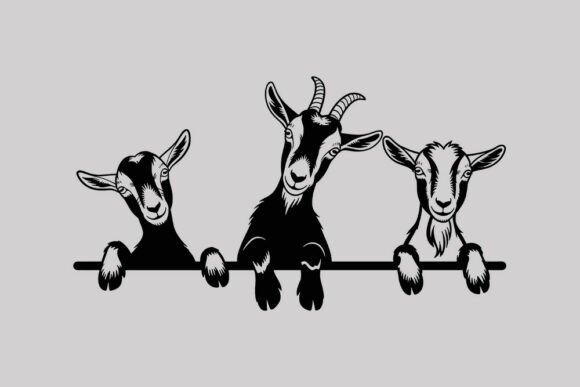
Review: Curious Funny Goat SVG for Embroidery Projects
As a designer who spends more time staring at stitch previews than most people care to admit, I approach every new digital embroidery file with a mix of hope and skepticism. We have all been there: you download a cute graphic, load it into your software, and realize the lines are too close together for a clean satin stitch or the details will vanish on a textured towel. That is why I took a close look at the Curious Funny Goat Svg before committing it to a client project. This isn't just about whether the image looks good on a screen; it is about how it translates into thread, fabric, and ultimately, a handmade product that holds up in the real world.
First Impressions and Visual Personality
When I first opened the files included in the zip—specifically the SVG, PNG, EPS, and DXF formats—the immediate takeaway was the character of the illustration. The "curious" aspect of the goat comes through in the line work and expression, which is crucial for embroidery design. In our trade, personality often gets lost when a vector is converted to stitches. If the eyes are too small or the snout too complex, the machine chews up the detail, and the charm disappears.
This particular graphic strikes a balance that feels intentional. It has enough definition to be recognizable as a goat without relying on micro-details that require a high-end machine and perfect tension to execute. The mood is lighthearted and whimsical, making it an excellent candidate for projects that need to evoke a smile. For Etsy sellers and boutique owners, this kind of visual appeal is gold. It signals fun and approachability, which are key drivers for buyer engagement in the Crafts and Graphics marketplace.
Real-World Application: The Tote Bag Test
To truly evaluate this asset, I imagined a specific scenario: a custom order for a local farmer's market vendor who needed branded tote bag designs. She wanted something that stood out but didn't look overly corporate. The Curious Funny Goat Svg fit this brief perfectly. When visualizing this on a canvas tote, the bold outlines of the SVG format allow for a clean conversion into a fill stitch or a thick running stitch outline.
However, practical judgment is required here. If you are stitching this onto a textured fabric like a waffle-weave kitchen towel or a heavy canvas, you must consider stitch density. A design that looks crisp on a white background might lose its definition if the fill areas are too sparse. For a project like this, I would recommend adjusting the underlay in your digitizing software to ensure the goat pops against the fabric texture. The result would be a finished product that feels professional and durable, rather than a sticker-like application that peels after a few washes.
Ideal Use Cases for Small Business Owners
Beyond tote bags, this design has versatility across various custom apparel items. Here is where I see it shining in a commercial setting:
- Sweatshirt Embroidery: The playful nature of the goat pairs wonderfully with cozy fleece or French terry. It works well as a left-chest logo or a larger back piece.
- Baby Embroidery: Parents love animal themes. This design is gentle enough for a baby onesie or bib, provided you use a soft stabilizer to prevent scratchiness against sensitive skin.
- Embroidered Patches: Because the shapes are distinct, this graphic would translate beautifully into a merrow-edge patch, adding value to jackets or hats.
- Holiday Embroidery: With minor color tweaks, this could easily become part of a seasonal collection, perhaps grazing on holly or wearing a Santa hat.
For creative entrepreneurs, the ability to adapt one design asset across multiple product lines is essential for maintaining brand consistency while maximizing ROI.
Technical Considerations and Fabric Challenges
While the source files (SVG, PNG, EPS, DXF) are ready to use with major electronics and software, they are not pre-digitized embroidery files unless specified by the seller. This is a critical distinction. As a reviewer, I must advise that you cannot simply plug an SVG directly into a home embroidery machine without processing it through digitizing software first. The quality of your final stitch-out depends entirely on how you convert these vectors into machine commands.
There are specific scenarios where you need to exercise caution with a design like this:
- Small Hoop Sizes: If you attempt to shrink this design for a cap front or a small pocket, ensure the "curious" facial features do not merge. Tiny details often turn into blobs of thread if the scale is too small.
- Stretchy Fabrics: Knits and jerseys require careful stabilization. Without a proper cut-away or tear-away stabilizer, the goat's outline could distort after the hoop is removed.
- Dark Fabrics: Always test your thread colors against dark backgrounds. You may need to add a layer of white underlay to prevent the fabric color from showing through the lighter parts of the goat.
- Curved Surfaces: Stitching on caps requires a different approach than flat hooping. The curvature can compress the design, so check the aspect ratio in your preview.
Enhancing Product Value and Trust
The ultimate goal of using a high-quality graphic like the Curious Funny Goat Svg is to elevate the perceived value of your work. Customers can tell the difference between a sloppy stitch-out and a polished personalized gift. When the lines are crisp and the coverage is even, it builds trust. It tells the buyer that you care about quality, which encourages repeat business.
Furthermore, for those selling printable mockups or digital previews, having clean vector files like the included EPS and SVG allows you to create stunning marketing images. These visuals are often what stop the scroll on social media and drive traffic to your small shop product listings.
Final Verdict and Designer Notes
In my professional opinion, the Curious Funny Goat Svg is a solid addition to any designer's library, provided it is handled with technical competence. It offers a blend of charm and simplicity that works well for both hobbyists and commercial embroidery professionals. However, success lies in the preparation.
Before you start stitching on a client's expensive garment, follow these practical steps:
- Test on Scrap: Always run a sample on the exact same fabric type you plan to use for the final item.
- Check Contrast: Ensure your thread choice provides enough contrast so the goat's expression remains visible from a distance.
- Review Licensing: The product description mentions the file formats but does not explicitly detail the commercial license terms. Always confirm with the seller whether you can sell finished physical items or if there are restrictions on digital redistribution.
- Inspect Details: Zoom in on your digitized preview. Look for jump stitches that can be trimmed and areas where satin columns might be too wide.
By treating this graphic as a foundation rather than a finished solution, you can create exceptional embroidery projects that delight customers and stand the test of time. Whether you are making a holiday gift or stocking your boutique, this design has the potential to be a star performer in your lineup.